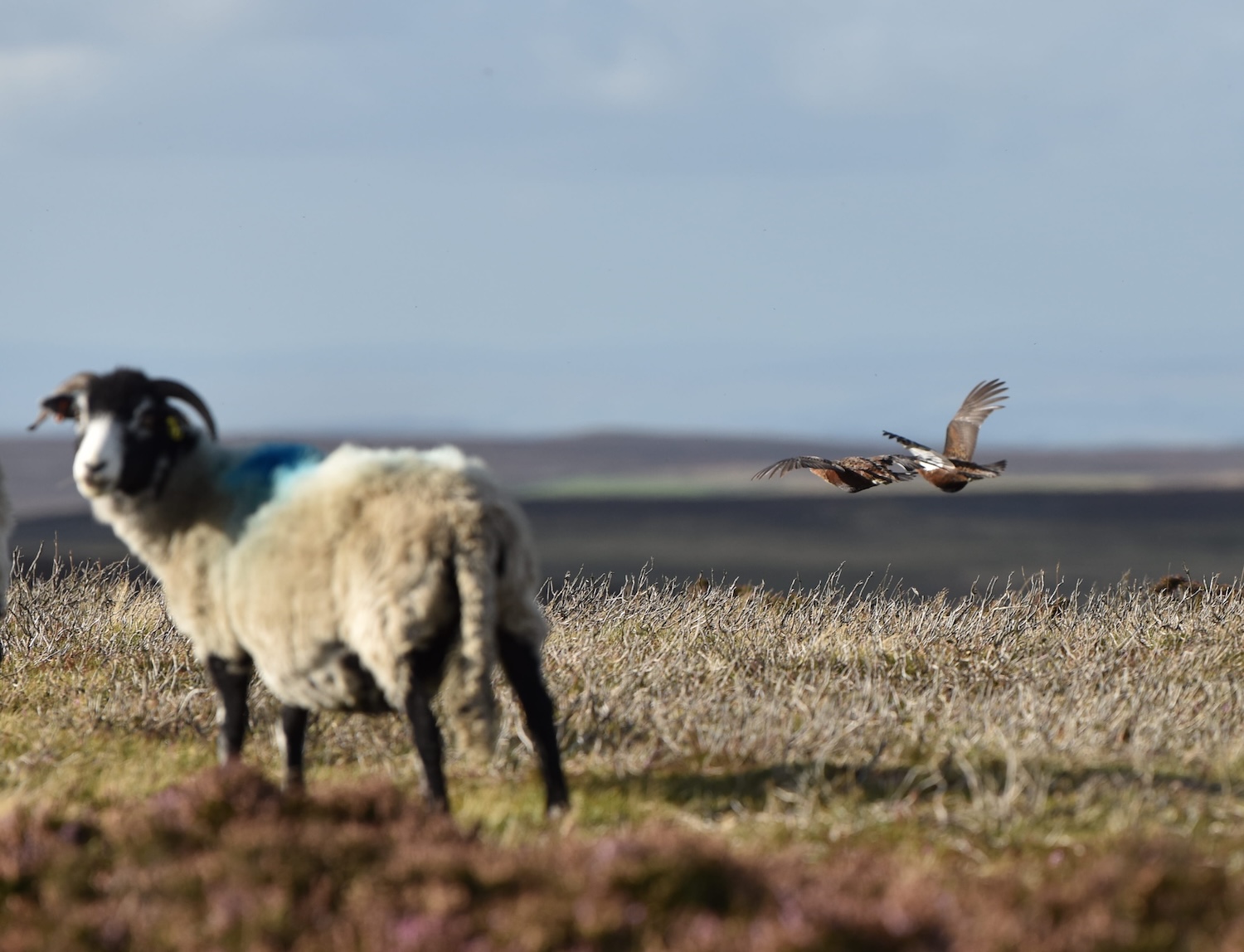
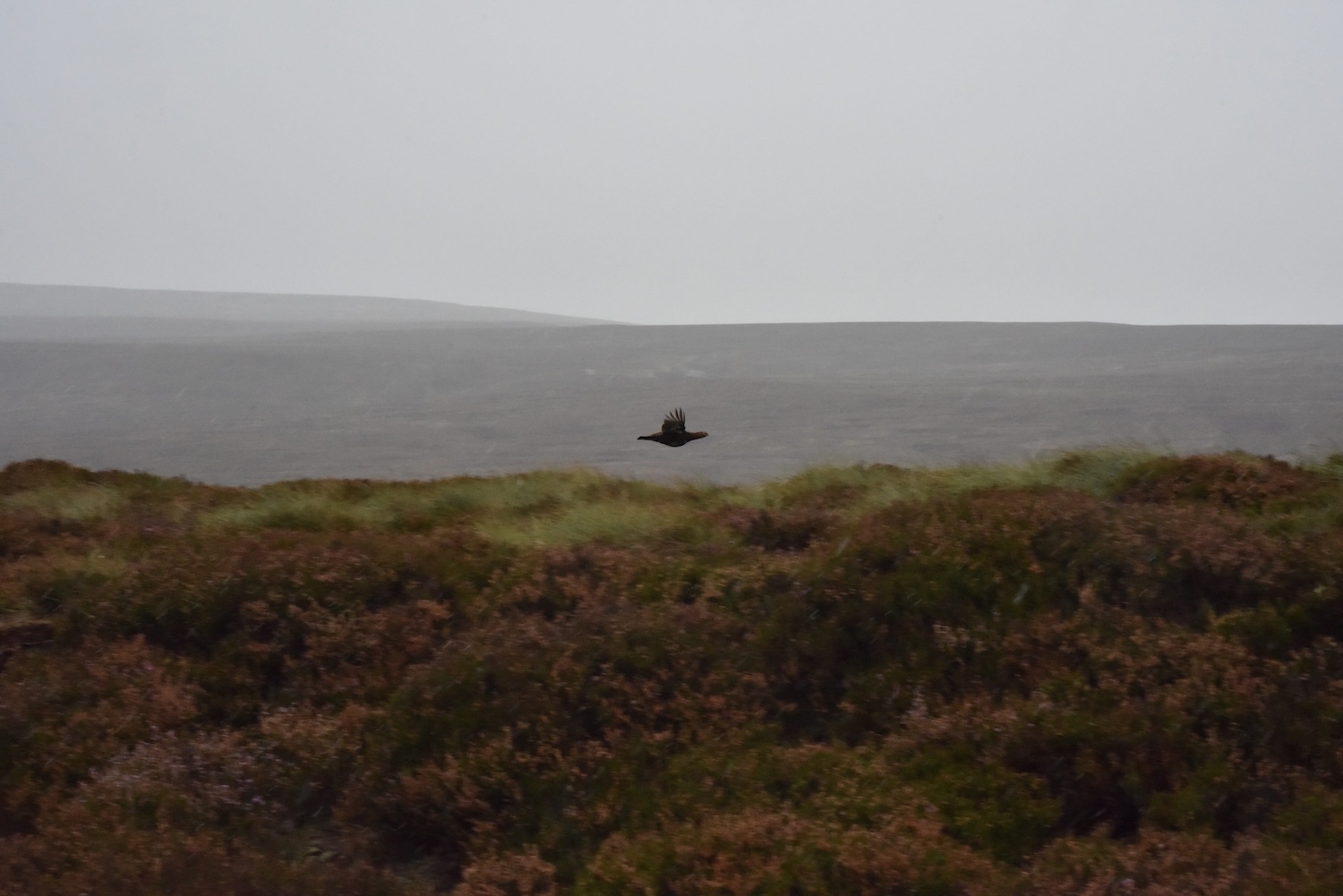
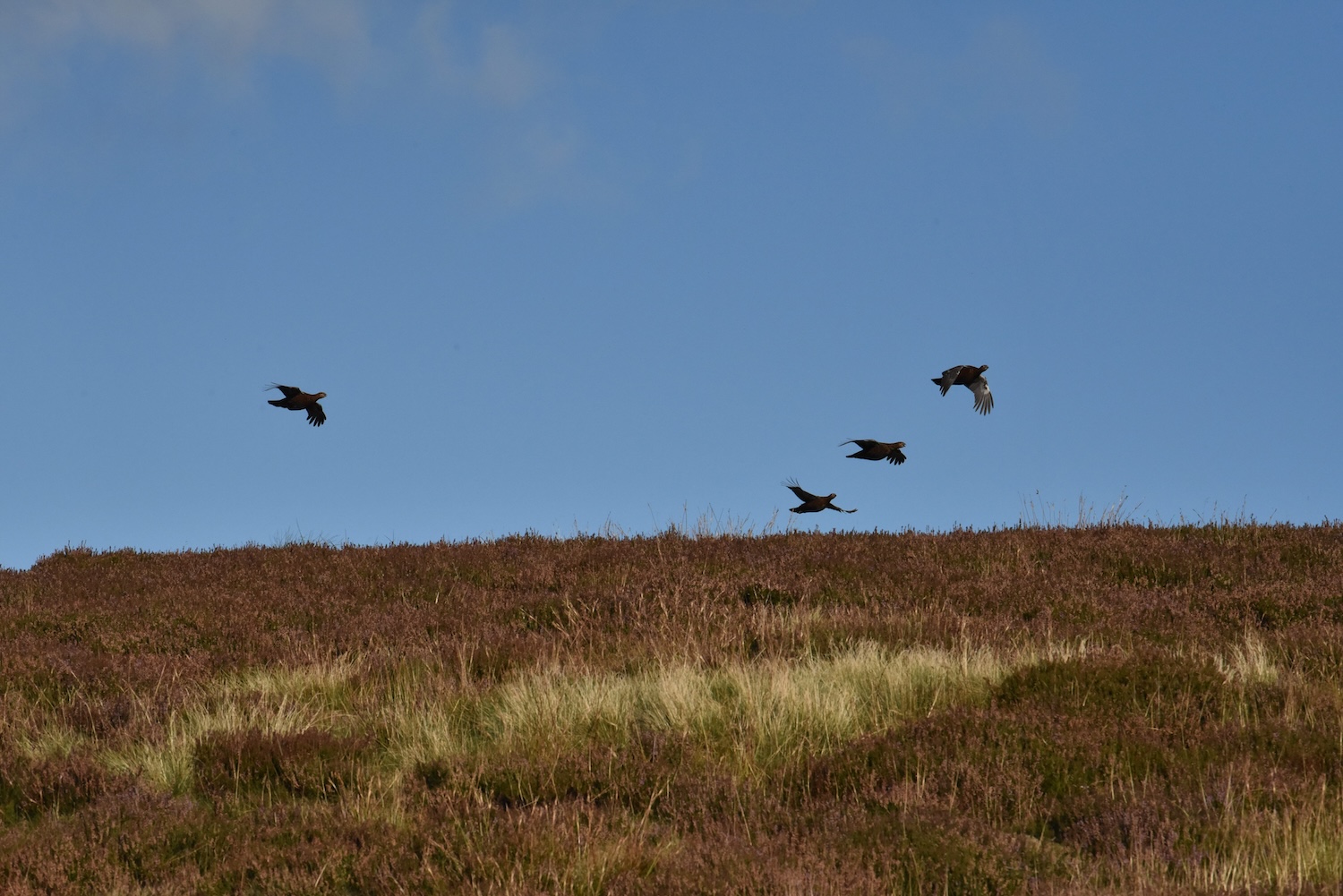
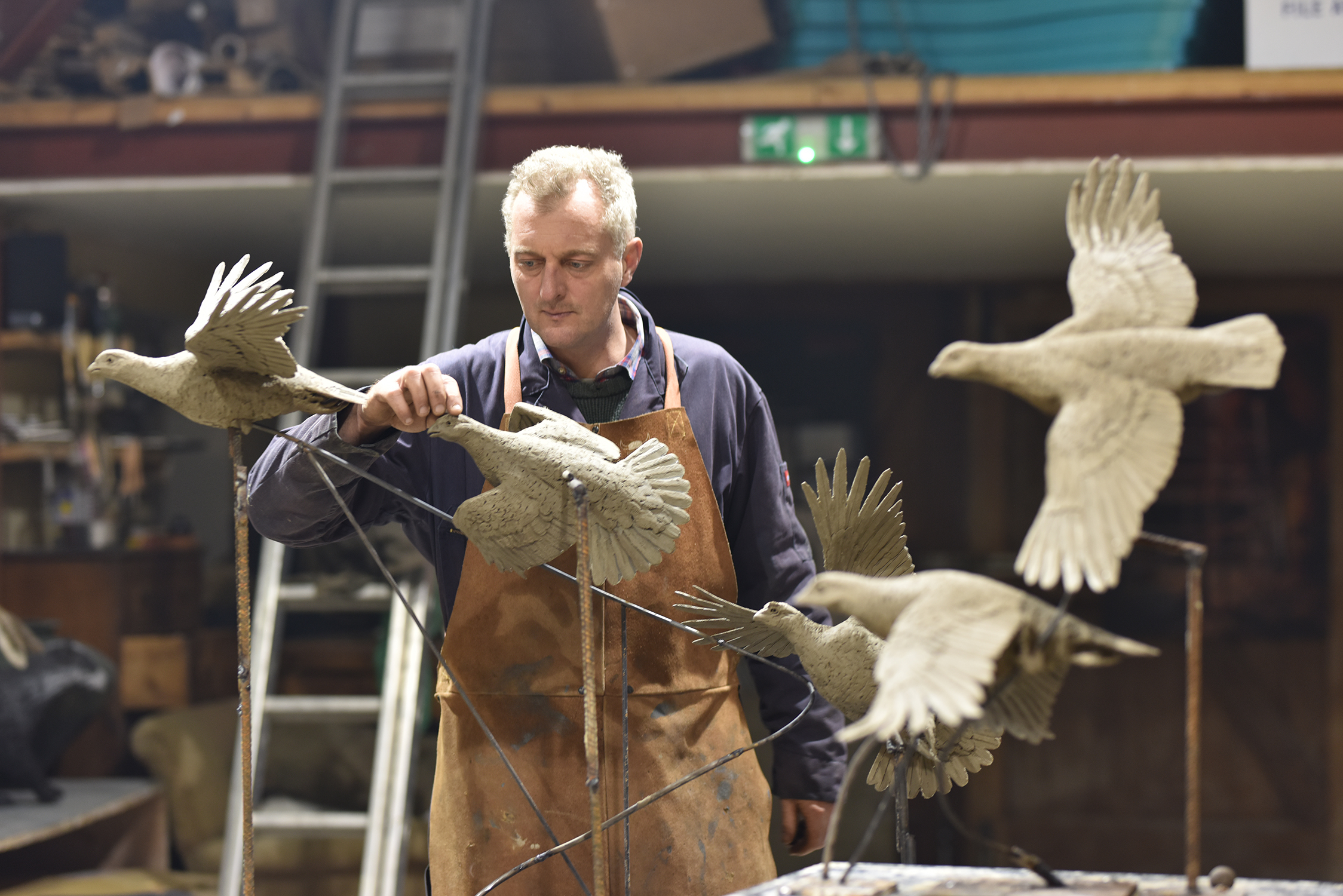
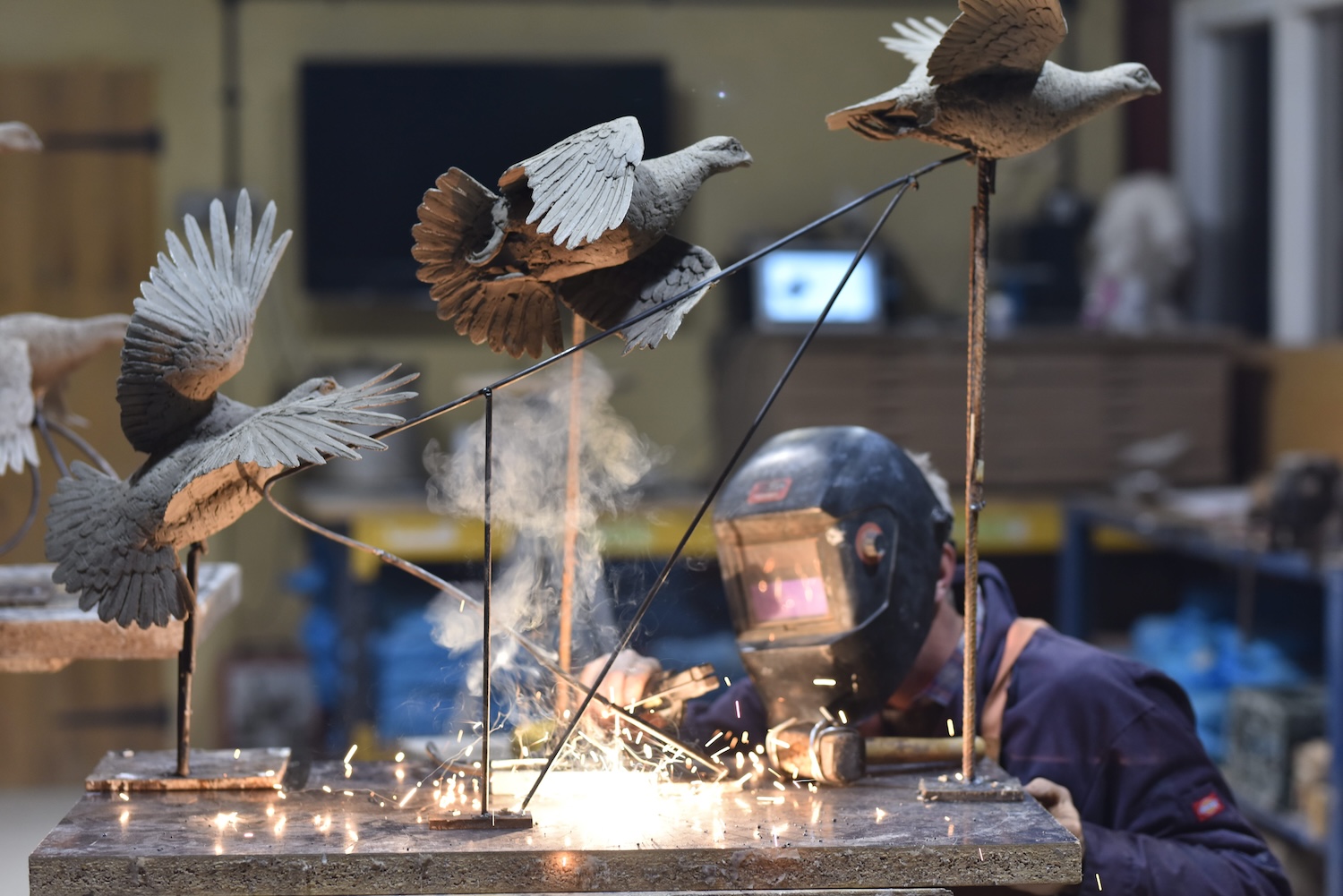
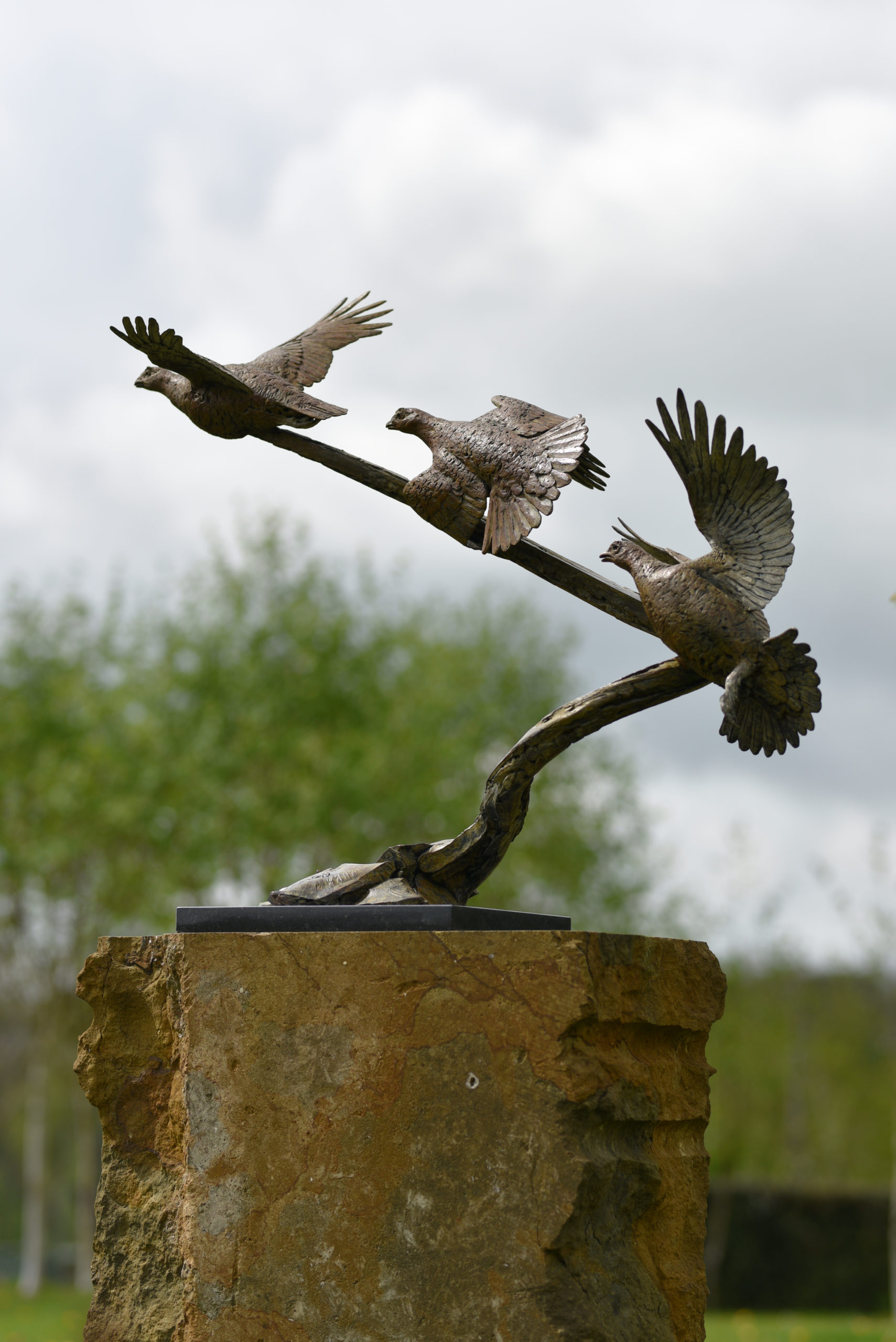
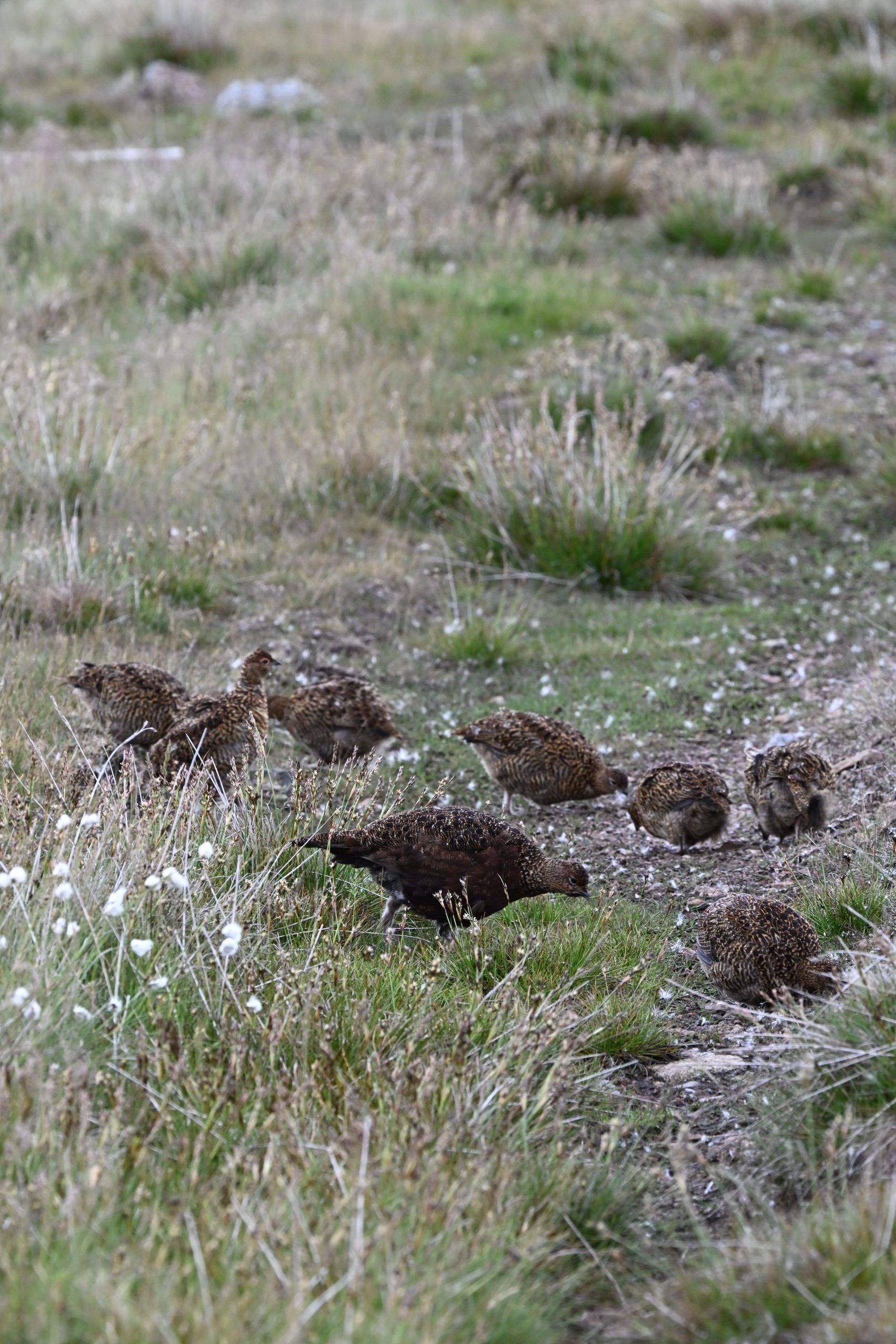
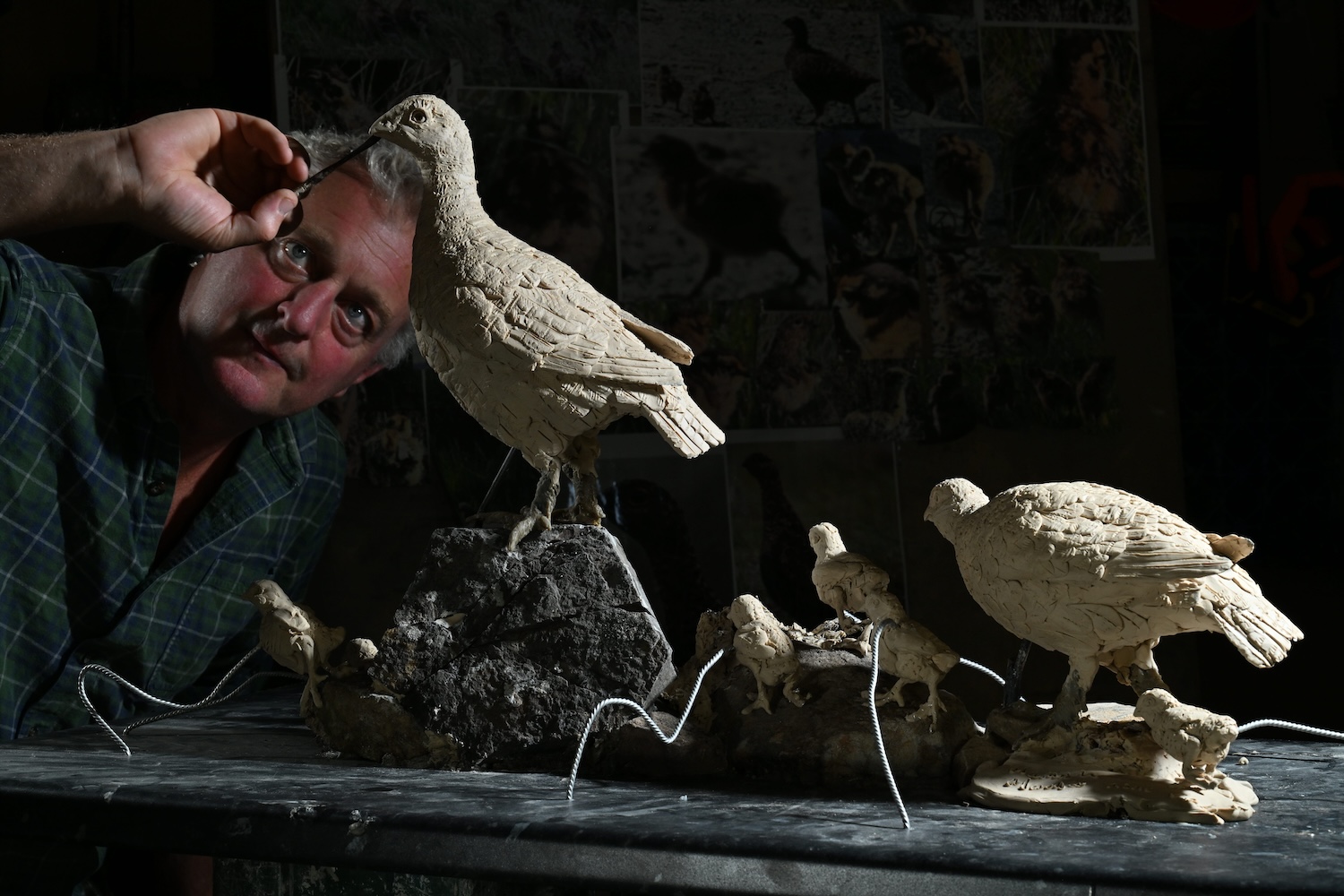
Returning to the moors in 2026 gave me an opportunity to revisit the landscape with fresh eyes and a new mission, to research a brood of grouse. I travelled to Priorsdale and Gunnerside to research them. The more time I spend on the moor, the more I realise that you cannot truly understand grouse in isolation. Their behaviour is shaped by the heather, the insects, the weather, and the predators around them. Every sculpture becomes as much about the place as it is about the bird.
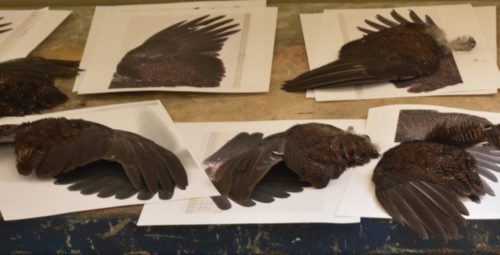
On this occasion, my intention was not simply to study red grouse, but to understand the landscape they inhabit and the intricate relationship between the birds, the moor and the people who manage it. Watching the grouse with their tiny, bumblebee-like chicks was one of the highlights of the visit. The keepers’ passionate knowledge about the birds’ behaviour and life cycle helped me understand details that are impossible to learn from photographs alone.
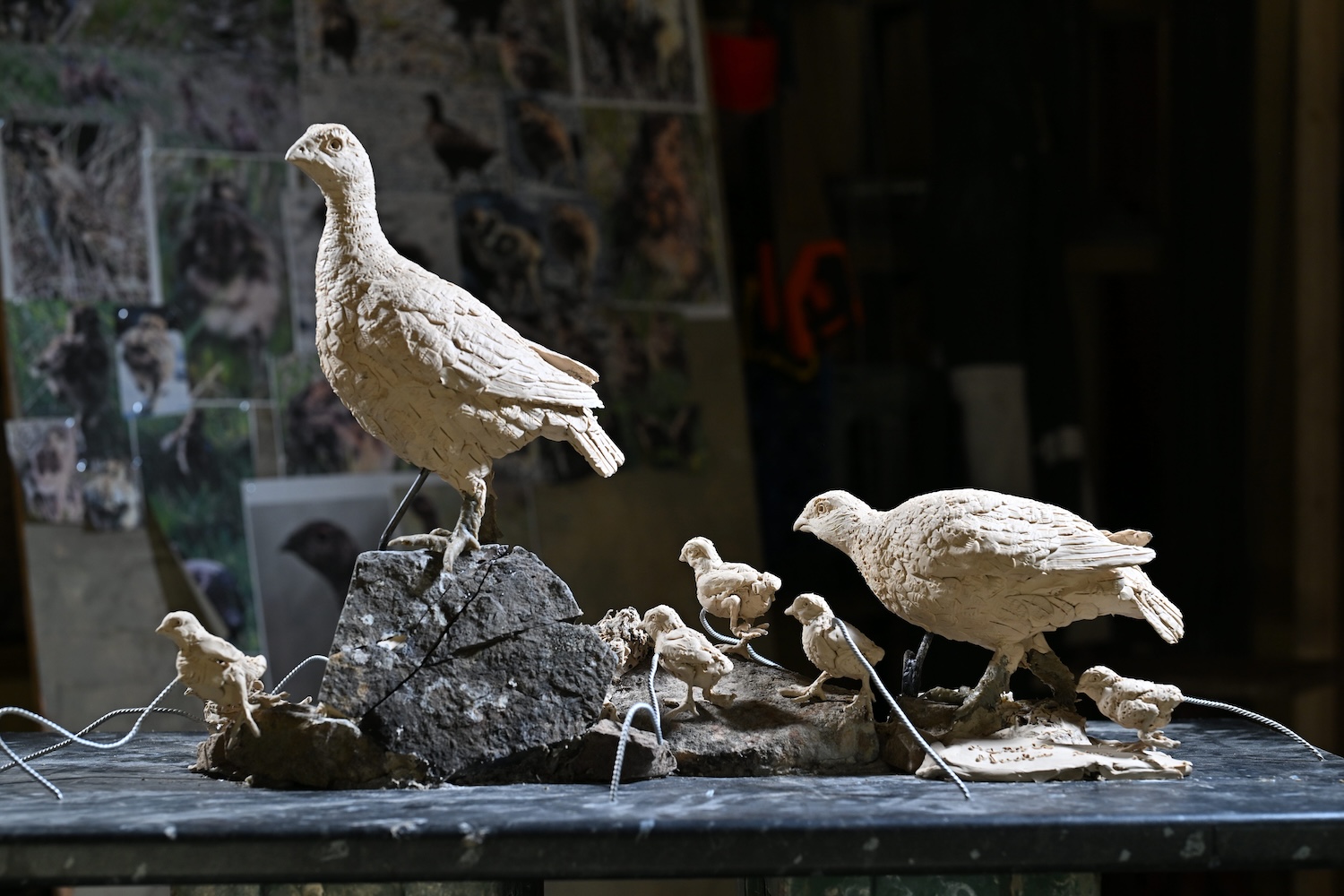
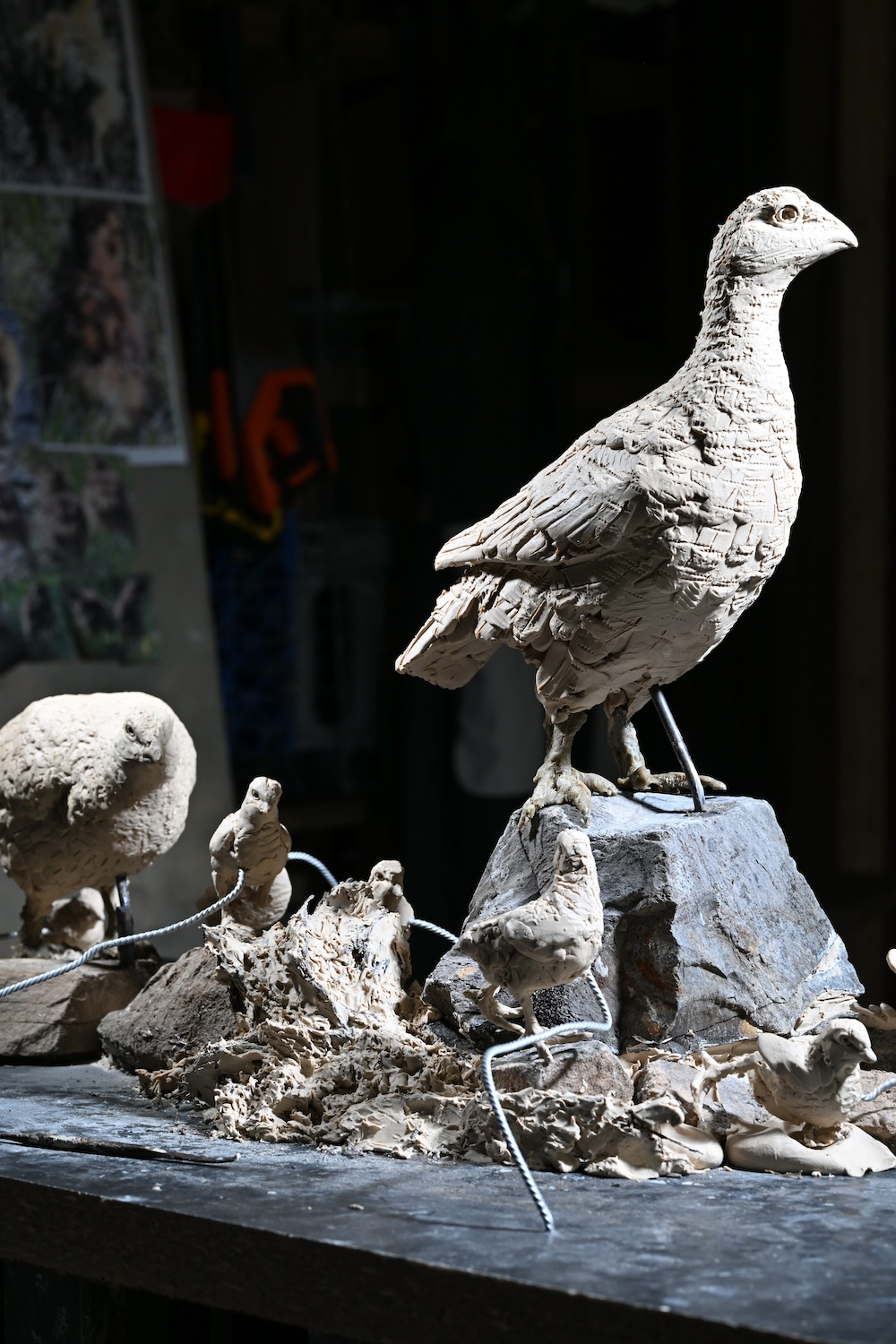
Red grouse are remarkably resilient birds and attentive parents, with both cock and hen playing a role in protecting the brood. It is these small observations that I hope give Grouse Brood 2026 its authenticity. In this sculpture, the chicks scramble over the heather almost like little reptiles as they hunt for insects. The cock bird stands alert on a rocky outcrop, watchful but relaxed, his scarlet comb lying flat rather than raised in aggression. The adults carry the crisp, sharply defined plumage and feathered legs of healthy wild birds, while the surrounding moorland plants have been carefully observed to root the composition in its natural setting.